
Custom Website vs Template: What Should You Choose?
Today, almost every business has a website.
But if you look closely, not all websites perform the same way.
Some convert consistently. Some struggle to generate even basic engagement.
In most cases, the difference is not just design.
It starts with a fundamental decision:
Should you build a custom website or use a template?
This decision directly impacts performance, scalability, branding, and long-term cost.
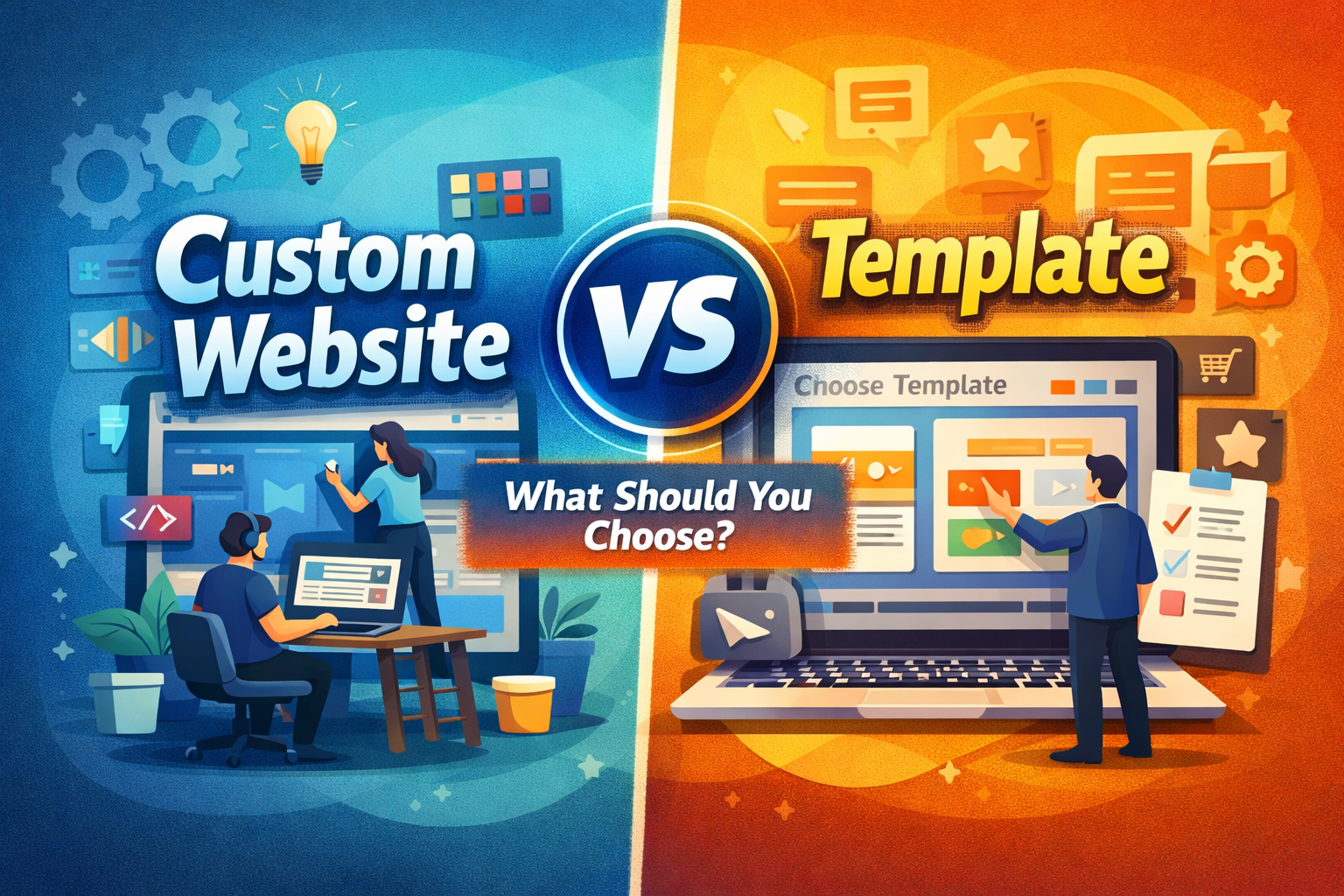
Custom Website vs Template: Understanding the Core Difference
Both approaches help you get online.
But they are built with completely different intentions.
- A template website is designed for speed and accessibility. It gives you a ready-made structure to launch quickly.
- A custom website is built from the ground up based on your business needs, user journey, and growth strategy.
At a surface level, both can look similar.
Underneath, they function very differently.
Why This Decision Impacts More Than Just Design
Most businesses evaluate this decision based on cost.
But the real impact goes beyond budget.
It affects:
- How users interact with your website
- How easily you can scale
- How your brand is perceived
- How well your site performs in search
Search engines like Google prioritize performance, structure, and user experience.
A website built without these considerations often becomes a limitation instead of an asset.
1. Design Flexibility and Brand Positioning
Design is not just about how your website looks.
It is about how clearly it communicates your brand.
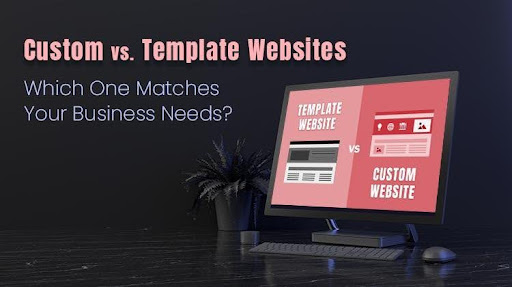
Template Website:
- Uses pre-designed layouts
- Limited customization options
- Often looks similar to other websites
Custom Website:
- Built specifically for your brand
- Designed around your audience
- Unique layout and user flow
For businesses competing in crowded markets, differentiation becomes critical.
A generic design can reduce trust and make your brand less memorable.
2. Cost Structure and Long-Term Investment
Cost is often the first consideration.
Template Website:
- Lower upfront cost
- Faster deployment
- Ideal for early-stage or low-budget projects
Custom Website:
- Higher initial investment
- Requires design, development, and planning
- Built for long-term performance
However, the real question is not just cost.
It is cost over time.
Template websites may require:
- Frequent fixes
- Plugin dependencies
- Redesigns as you scale
Custom websites often reduce these limitations and provide better ROI in the long run.
3. Performance and Speed Optimization
Website performance directly affects user behavior.
Even small delays can increase bounce rates and reduce conversions.
Template Website:
- Often includes unnecessary code
- Performance depends on theme quality
- Limited control over optimization
Custom Website:
- Built with optimized code
- Designed for performance from the start
- Greater control over speed and efficiency
Performance is not just technical.
It directly impacts business outcomes.
4. Features and Functional Capabilities
As businesses grow, website requirements evolve.
Template Website:
- Limited to available features
- Requires plugins for additional functionality
- Customization can become complex over time
Custom Website:
- Built around your exact requirements
- Allows advanced features and integrations
- Easier to scale functionality
If your business relies on specific workflows or systems, flexibility becomes essential.
5. Scalability and Future Growth
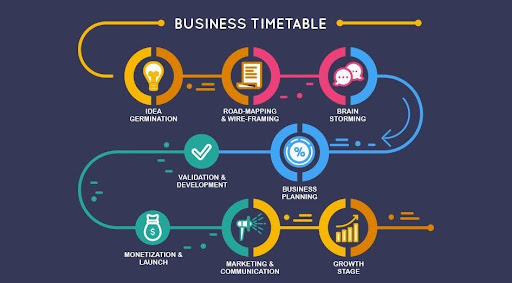
Your website should not just support your current needs.
It should support where your business is going.
Template Website:
- Suitable for simple use cases
- May require rebuilding as complexity increases
Custom Website:
- Designed for scalability
- Easier to expand features, pages, and integrations
Choosing scalability early prevents costly transitions later.
6. Time to Launch and Speed of Execution
Speed can be a deciding factor.
Template Website:
- Quick setup
- Ready-made structure
- Ideal for urgent launches
Custom Website:
- Requires planning and development time
- Involves design, testing, and refinement
If time-to-market is critical, templates offer an advantage.
If long-term performance matters, custom development is more strategic.
7. SEO and Technical Optimization
Search visibility depends heavily on how your website is built.
Template Website:
- SEO depends on theme quality
- Limited control over technical structure
Custom Website:
- Built with SEO best practices
- Better control over:
- Site structure
- Page speed
- Technical optimization
A strong foundation improves long-term organic growth.
8. Maintenance, Control, and Risk
Ongoing management is often overlooked.
Template Website:
- Relies heavily on plugins
- Higher risk of compatibility issues
- Frequent updates required
Custom Website:
- More controlled environment
- Fewer dependencies
- Easier long-term management
Reduced complexity leads to better stability.
Custom vs Template: Strategic Comparison
| Factor | Custom Website | Template Website |
| Design | Fully unique | Pre-designed |
| Cost | Higher upfront | Lower upfront |
| Performance | Optimized | Theme-dependent |
| Flexibility | High | Limited |
| Scalability | Strong | Moderate |
| SEO Control | Full | Partial |
| Long-Term Value | High | Variable |
Which Option Is Right for Your Business?
There is no universal answer.
The right choice depends on your business stage and objectives.
Choose a Template Website if:
- You need a quick launch
- You have a limited budget
- Your requirements are simple
Choose a Custom Website if:
- You want a strong brand presence
- You need advanced functionality
- You are planning long-term growth
The key is aligning your website with your business strategy.
Common Mistakes Businesses Make
- Choosing based only on initial cost
- Ignoring scalability
- Overcomplicating simple projects
- Underestimating future requirements
A short-term decision often leads to long-term limitations.
Is a Custom Website Worth the Investment?
For businesses focused on growth, the answer is yes.
A custom website:
- Enhances user experience
- Supports branding
- Improves performance
- Scales with your business
It is not just a website.
It is a business asset.
How Markit Media Helps You Make the Right Choice
Choosing between a custom website and a template requires clarity and experience.
At Markit Media, we focus on:
- Understanding your business goals
- Recommending the right approach
- Designing conversion-focused websites
- Building scalable solutions
- Providing long-term support
The goal is simple.
Build a website that performs, not just exists.
Frequently Asked Questions
Is a custom website always better than a template?
Not always. It depends on your goals, budget, and complexity.
Can I start with a template and upgrade later?
Yes, but it may require a complete rebuild.
Which option is better for SEO?
Custom websites offer better control and long-term SEO advantages.
How much does a custom website cost?
Costs vary based on features and complexity, typically higher than templates.
In This Article
- Why Website Approach Matters
- Custom vs Template Overview
- Design and Branding Differences
- Cost and Investment Analysis
- Performance and Speed
- Features and Functionality
- Scalability and Growth
- Time to Launch
- SEO Considerations
- Maintenance and Risk
- Strategic Comparison
- Choosing the Right Option
- Common Mistakes
- Is Custom Development Worth It
- How Markit Media Helps
Top Social Media Companies in Chicago
Today, social media is one of the most powerful marketing channels.
It drives brand awareness, customer engagement, and direct conversions.
But managing social media effectively requires more than just posting content.
It requires:
- Strategy
- Consistency
- Creative execution
- Performance tracking
This is why businesses are turning to professional social media companies.
And in a competitive market like Chicago, choosing the right agency becomes critical.
Why Chicago Is a Hub for Social Media Agencies
Chicago is one of the leading business and marketing hubs in the United States.
It offers:
- A strong startup ecosystem
- Established enterprises
- Access to creative and technical talent
This has led to the rise of specialized social media agencies that focus on performance-driven marketing.
From small businesses to enterprise brands, companies in Chicago are investing heavily in social media growth.
What Defines a Top Social Media Company?
Not all agencies deliver the same results.
Top social media companies focus on:
- Strategy-first approach
- Platform-specific expertise
- Data-driven decision-making
- Creative content production
- Consistent optimization
They do not just manage accounts.
They drive measurable business outcomes.
Top Social Media Companies in Chicago (2026)
Below are some of the leading social media agencies based on reputation, service offerings, and performance.
1. LYFE Marketing
A well-known agency focused on social media management and advertising.
- Specializes in Facebook and Instagram marketing
- Strong focus on ROI-driven campaigns
- Works with small and mid-sized businesses
2. Social Driver
A Chicago-based agency focused on digital strategy and social impact.
- Strong expertise in content strategy
- Works with organizations and enterprises
- Focus on engagement and storytelling
3. Fresh Content Society
A performance-driven social media agency.
- Focus on TikTok and modern platforms
- Data-driven campaigns
- Known for creative content
4. VisualFizz
A Chicago-based digital marketing agency with strong social media capabilities.
- Combines branding and performance marketing
- Focus on B2B and SaaS companies
- Integrated digital strategy
5. Comrade Digital Marketing Agency
A full-service digital agency.
- Social media + SEO + web development
- Focus on lead generation
- Works with service-based businesses
6. Straight North
A well-established agency with strong digital marketing services.
- Social media advertising
- Lead generation campaigns
- Performance-focused approach
7. Walker Sands
A premium B2B marketing agency.
- Enterprise-level social media strategy
- Integrated PR and marketing
- Strong industry reputation